Classic Agricultural Fencing Built to Last
Kentucky Board Fence in Benton for properties needing traditional post-and-rail livestock containment
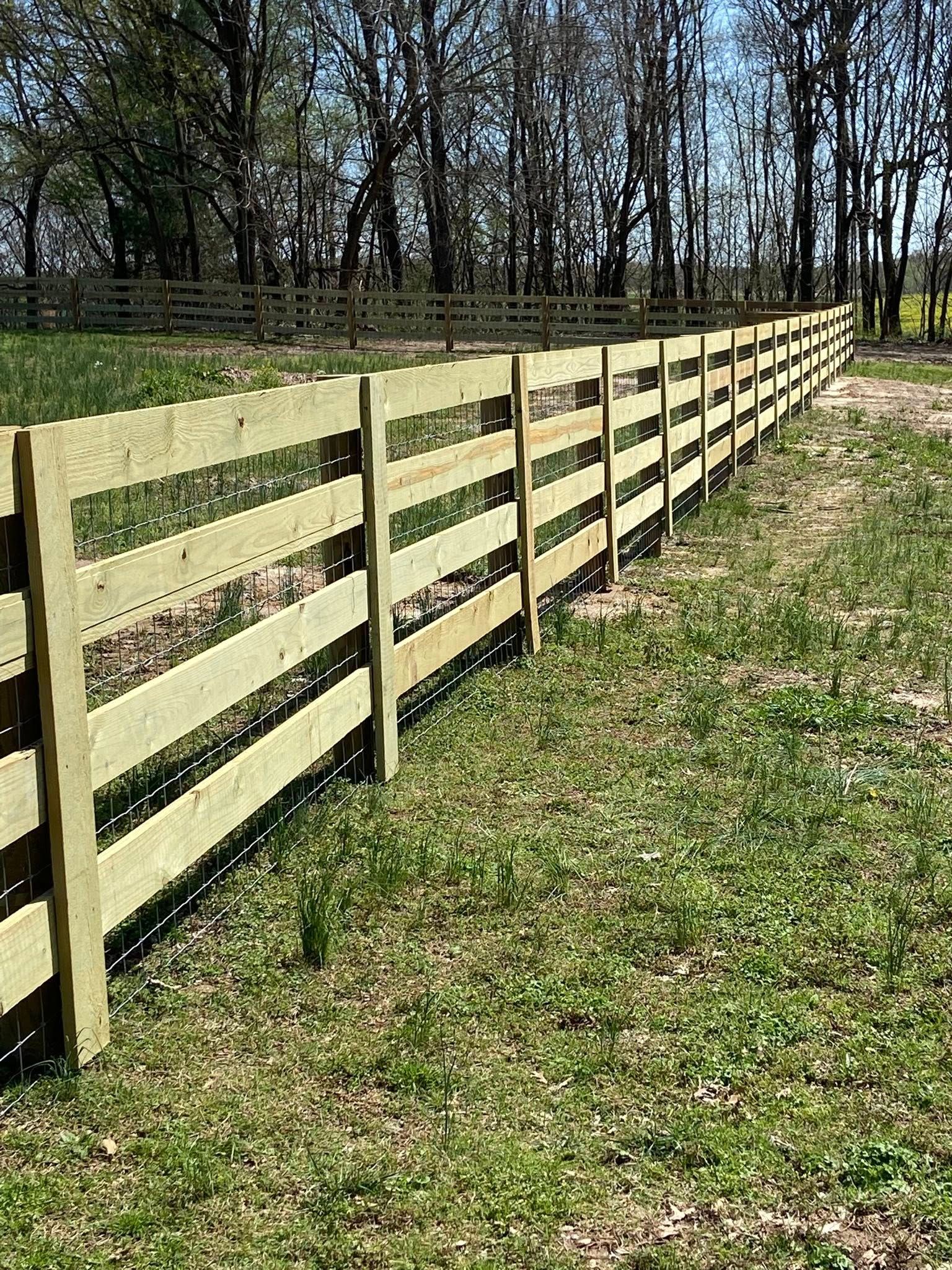
Versatile Fence Co. installs Kentucky board fences in Benton for property owners who need reliable livestock containment and a traditional look that complements open land. You see these fences throughout the region on horse farms, cattle operations, and rural properties where visibility and durability matter more than privacy. The design uses round vertical wooden posts spaced roughly eight feet apart with horizontal boards running parallel between them, creating open lines that let you see across your property while keeping animals where they belong.
We build these fences in three-board and four-board configurations depending on the size of your animals and the level of containment you need. Three-board fences work well for larger livestock like cattle and mature horses, while four-board fences provide tighter spacing for younger animals or mixed herds. The round posts anchor deep into the ground, and the horizontal boards attach securely to handle pressure from animals leaning or rubbing against the rails without warping or pulling loose over time.
If your property needs a fence that holds up to daily use and looks right in a rural setting, contact us to walk the perimeter and discuss board spacing and post placement.
How We Build Post-and-Rail Board Fences
We start by measuring the fence line and marking post locations at eight-foot intervals to maintain consistent spacing and structural integrity. Each round post gets set into an augered hole deep enough to resist frost heave and lateral pressure from livestock. We tamp soil and gravel around the base to keep posts plumb and stable, then attach the horizontal boards at measured heights using galvanized fasteners that resist rust and hold tight through seasonal expansion and contraction.
After installation, you will notice clean sight lines across your pasture with boards aligned level and posts standing straight without lean or twist. The fence holds animals reliably without sagging rails or loose connections, and the wood weathers naturally over time to a silvered gray that blends into the landscape without needing paint or stain.
We use pressure-treated lumber for ground contact and select-grade boards for the rails to reduce splitting and warping. The finished fence requires minimal maintenance beyond occasional inspection for damaged boards, and you can replace individual sections without tearing down entire runs if a board cracks or a post rots years down the line.
What You Should Know About Board Fencing
These questions cover the practical details most property owners ask when planning a Kentucky board fence for livestock or land division.
Versatile Fence Co. builds Kentucky board fences that hold up to the demands of working livestock operations and look right on rural land. Reach out to schedule a site visit and get a detailed estimate based on your fence line and board configuration.